AI can do the gathering and reconciling a private credit screen runs on. It can't do the big...
Written in collaboration with Rohan Saharia, Suha Gillani, and Annie Longsworth from ERM.
Auquan and ERM co-hosted a working group in New York last month, bringing together dozens of senior sustainability professionals from across private markets. The session centered on one question: how is supply chain risk reshaping the way firms invest, monitor, and exit?
ERM, the world’s largest specialist sustainability consultancy with more than 50 years of advisory experience, helped steer the conversation toward the operational realities their teams see across the industry every day. The discussion stayed practical. No panels, no slides-and-nod. People talked about what they’re doing, what they can’t figure out, and where the gaps are.
The room agreed on this one quickly. Revenue risk gets a CFO’s attention. Regulatory fines don’t, or at least not at the same speed.
One participant put it plainly:
“I can get a lot more done in a CFO conversation when I say you’re going to lose this customer than when I cite a compliance requirement.”
The picture varies by regulatory exposure. Firms within CSRD scope face potential penalties of up to 5% of revenue for non-compliance. That figure gets a CFO’s attention on its own. For firms outside that scope, customer pressure does the work regulation can’t.
For investors evaluating portfolio companies, this reframes the question. The signal to watch isn’t regulatory exposure alone. It’s whether a company’s key customers are tightening supply chain conduct requirements. Large listed buyers in pharma, telecoms, and retail are pushing expectations downstream, and that pressure is landing on smaller, private companies with limited resources to respond.
Large listed companies are formalizing these demands through quarterly questionnaires, supplier scorecards, and structured disclosure processes. Smaller portfolio companies then face a structural mismatch: standards designed for large organizations, applied to teams with no dedicated sustainability function and no internal systems to capture the required data.
As one participant described it:
“A square peg in a round hole.”
Deal teams feel this, too. You need quantitative framing of supply chain risk before commitment. Investment professionals respond to numbers, not narrative.
Firms tracking customer-driven supply chain pressure have an information advantage over firms focused on regulation alone. They’re pricing risk more completely.
Recent supply chain shocks have accelerated the push for deeper transparency and traceability through the chain. This is a structural shift, not a temporary reaction.
Sustainability risk needs to show up in the financial model. Compliance cost exposure. Revenue at risk from customer pressure. Litigation probability.
One participant described quantifying $1.85M in avoided compliance costs for a med tech company by mapping regulatory exposure across its nine key customers. That’s the standard the room was pointing toward.
Not:
“We identified a supply chain risk.”
But:
“Here’s what it costs if this goes wrong, and here’s what we saved by catching it.”
Sustainability teams that can speak in numbers investment committees act on are earning their seat at the table. Teams producing narrative risk summaries are losing it.
Forced labor scrutiny, sourcing disputes, supply chain failures. These used to be exit-stage surprises. Multiple participants described them influencing deal pricing during initial screening, and in some cases killing deals outright.
Pharma, healthcare, retail, and OEM manufacturing came up repeatedly. These sectors run complex, geographically distributed supply chains with limited visibility beyond Tier 1. Labor and human rights issues were the most common triggers participants cited.
Firms are stress-testing supply chain resilience before exit now, not scrambling when a buyer’s diligence team finds something.
The room also surfaced a specific failure mode: escalation gaps. Analysts flag supply chain risks. Those findings don’t always reach the IC. Forced labor flags in particular were called out as under-escalated. The breakdown happens at the last step: getting findings from diligence teams into the investment committee at the right time. By the time a risk reaches the IC, the deal thesis is often formed, timelines are compressed, and the issue lands as a footnote rather than a decision driver. Firms recognize the risk but can’t move from signal to decision fast enough.
Systemic supply chain risks also create opportunity. Firms that identify and address sector-wide exposures use value creation to differentiate themselves. They offer customers alternative, cleaner products and position portfolio companies ahead of tightening expectations.
AI is accelerating not just identification, but the conversation about what to do with what's found. For example - if a renewables developer discovered that equipment in its supply chain was subject to anti-dumping, countervailing duty, or FEOC requirements, there is growing expectation that the impact is assessed, remedial action is established, and residual risk estimated - all within a due diligence or 100-day value creation timeframe. The speed of detection is raising the bar on speed of response. Supply chain mapping that took nine days now takes three. UFLPA exposure that surfaced in week two of diligence now appears on day three.
But AI doesn’t tell you what to do with the signal. And the room raised a concern gaining traction across the industry: hallucinated diligence reports. As firms adopt AI tools for sustainability and supply chain analysis, output trust becomes the central question. Can you trace a conclusion to its source? Would it hold up to an auditor or regulator three years from now?
The practitioners in this room weren’t debating whether to adopt AI for supply chain intelligence. They were working through how to use it without creating new compliance risk.
Visibility into direct suppliers is table stakes.
One credit investor was blunt:
“It’s not what’s happening at your first supplier. It’s what’s happening at the second or third, and that’s where the forced labor issues are.”
Passive and credit investors feel this most. You can’t mandate supply chain changes the way a controlling equity holder can. The reputational and financial exposure doesn’t shrink to match your influence.
Visibility is only part of the problem. The deeper issue is ownership. Tier 2–3 risk doesn’t sit with the portfolio company, and it doesn’t sit with the GP. The question has shifted from “can we see the signal?” to “what must they do about it” and “who acts on it?”?
Industry-led initiatives, shared audits, sector frameworks, are starting to help. Adoption is uneven and the data is fragmented. The technology to surface Tier 2–3 risks exists. The gap is in governance, determining suitable remedial actions, and escalation: getting signals to the people who can act on them.
Participants drew a useful distinction between systemic and idiosyncratic supply chain risks. Systemic risks (sector-wide exposures, geographic hotspots) tell you where to look and what to look for. But bad actors are getting better at disguising sources of materials from high-risk regions. AI-driven supply chain intelligence is gaining traction at the deeper tiers where traditional audit approaches can’t reach.
One of the sharpest lines came from a credit investor:
“Once you’ve closed, you’ve bought the airline ticket. You’re not flying the plane.”
Lenders and passive investors can’t reshape supply chain practices post-close. Their tools are monitoring, quarterly check-ins, and the equity cushion. So the screening has to be right before commitment. If your sustainability team’s analysis arrives after the IC has formed a view, you’ve produced documentation, not diligence.
Supply chain risk is financially material. The tools to act on it vary based on where you sit in the capital stack.
Credit and passive investors may need to price this at entry, and have more of a birds-eye view. Equity holders with operational control need to ask whether portfolio companies have real enforcement mechanisms or just policies in a drawer.
LPs are pushing this from above. They’re raising human rights and labor risks at board level when reviewing GP performance and governance. Policies and high-level disclosures no longer satisfy. LPs want evidence: risks identified before IC decisions, exposure monitored across portfolios, escalation processes documented and clear. Supply chain oversight is becoming a governance question as much as a compliance one.
The firms pulling ahead are building quantification into diligence. They’re tracking customer pressure alongside regulatory developments. And they’re investing in supply chain intelligence that drives decisions, not just reports.
Thank you to our partners at ERM, particularly Rohan Saharia, Suha Gillani, and Annie Longsworth, for co-hosting and guiding the conversation, along with Jim Saggers, Lucas Scott and Ricardo Ferreira from the Auquan team. And to every participant who brought their experience to the table. We’ll be hosting more sessions like this. If you’d like to be in the room next time, reach out.
Auquan’s Sustainability Agent helps private markets teams screen deals, monitor portfolios, and meet regulatory and LP reporting demands. See how it works →
ERM partners with clients to navigate fast-paced and competitive M&A transaction environments. See further details here.
ERM + Auquan: Deep Supply Chain Intelligence for Private Markets
ERM and Auquan have joined forces to address one of the most underserved challenges in sustainability due diligence: meaningful visibility into Tier 2 and Tier 3 supply chains.
ERM brings deep sector expertise, materiality judgment, and client-tailored risk frameworks to translate complex supply chain signals into actionable intelligence. Auquan's AI agents screen and monitor over two million sources across 76 languages to surface sustainability controversies, reputational risks, and adverse events across entire portfolios.
Together, we enable deep sub-supplier screening within the timelines of a typical transaction process, delivering a differentiated offering for private equity and corporate clients seeking to meet the growing demands of CSRD supply chain disclosure, investor due diligence standards, and evolving regulatory requirements around value chain transparency.
Each day we spotlight under-the-radar investment themes and idiosyncratic risks pulled from our intelligence engine, often involving emerging markets, supply chain issues, ESG risks, and the impact of regulatory changes.
AI can do the gathering and reconciling a private credit screen runs on. It can't do the big...

At SuperReturn Private Credit Europe 2026 in London this week, Auquan CEO Chandini Jain moderated a...
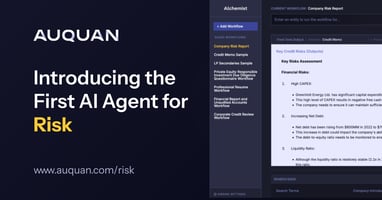
Today, Auquan announced launch of Risk Agent, the first and only AI agent that autonomously...
Each day we spotlight under-the-radar investment themes and idiosyncratic risks pulled from our intelligence engine, often involving emerging markets, supply chain issues, ESG risks, and the impact of regulatory changes.


15 minutes to see what’s possible when manual work disappears.
Interested in working at Auquan? Click here
Written in collaboration with Rohan Saharia, Suha Gillani, and Annie Longsworth from ERM.
Auquan and ERM co-hosted a working group in New York last month, bringing together dozens of senior sustainability professionals from across private markets. The session centered on one question: how is supply chain risk reshaping the way firms invest, monitor, and exit?
ERM, the world’s largest specialist sustainability consultancy with more than 50 years of advisory experience, helped steer the conversation toward the operational realities their teams see across the industry every day. The discussion stayed practical. No panels, no slides-and-nod. People talked about what they’re doing, what they can’t figure out, and where the gaps are.
The room agreed on this one quickly. Revenue risk gets a CFO’s attention. Regulatory fines don’t, or at least not at the same speed.
One participant put it plainly:
“I can get a lot more done in a CFO conversation when I say you’re going to lose this customer than when I cite a compliance requirement.”
The picture varies by regulatory exposure. Firms within CSRD scope face potential penalties of up to 5% of revenue for non-compliance. That figure gets a CFO’s attention on its own. For firms outside that scope, customer pressure does the work regulation can’t.
For investors evaluating portfolio companies, this reframes the question. The signal to watch isn’t regulatory exposure alone. It’s whether a company’s key customers are tightening supply chain conduct requirements. Large listed buyers in pharma, telecoms, and retail are pushing expectations downstream, and that pressure is landing on smaller, private companies with limited resources to respond.
Large listed companies are formalizing these demands through quarterly questionnaires, supplier scorecards, and structured disclosure processes. Smaller portfolio companies then face a structural mismatch: standards designed for large organizations, applied to teams with no dedicated sustainability function and no internal systems to capture the required data.
As one participant described it:
“A square peg in a round hole.”
Deal teams feel this, too. You need quantitative framing of supply chain risk before commitment. Investment professionals respond to numbers, not narrative.
Firms tracking customer-driven supply chain pressure have an information advantage over firms focused on regulation alone. They’re pricing risk more completely.
Recent supply chain shocks have accelerated the push for deeper transparency and traceability through the chain. This is a structural shift, not a temporary reaction.
Sustainability risk needs to show up in the financial model. Compliance cost exposure. Revenue at risk from customer pressure. Litigation probability.
One participant described quantifying $1.85M in avoided compliance costs for a med tech company by mapping regulatory exposure across its nine key customers. That’s the standard the room was pointing toward.
Not:
“We identified a supply chain risk.”
But:
“Here’s what it costs if this goes wrong, and here’s what we saved by catching it.”
Sustainability teams that can speak in numbers investment committees act on are earning their seat at the table. Teams producing narrative risk summaries are losing it.
Forced labor scrutiny, sourcing disputes, supply chain failures. These used to be exit-stage surprises. Multiple participants described them influencing deal pricing during initial screening, and in some cases killing deals outright.
Pharma, healthcare, retail, and OEM manufacturing came up repeatedly. These sectors run complex, geographically distributed supply chains with limited visibility beyond Tier 1. Labor and human rights issues were the most common triggers participants cited.
Firms are stress-testing supply chain resilience before exit now, not scrambling when a buyer’s diligence team finds something.
The room also surfaced a specific failure mode: escalation gaps. Analysts flag supply chain risks. Those findings don’t always reach the IC. Forced labor flags in particular were called out as under-escalated. The breakdown happens at the last step: getting findings from diligence teams into the investment committee at the right time. By the time a risk reaches the IC, the deal thesis is often formed, timelines are compressed, and the issue lands as a footnote rather than a decision driver. Firms recognize the risk but can’t move from signal to decision fast enough.
Systemic supply chain risks also create opportunity. Firms that identify and address sector-wide exposures use value creation to differentiate themselves. They offer customers alternative, cleaner products and position portfolio companies ahead of tightening expectations.
AI is accelerating not just identification, but the conversation about what to do with what's found. For example - if a renewables developer discovered that equipment in its supply chain was subject to anti-dumping, countervailing duty, or FEOC requirements, there is growing expectation that the impact is assessed, remedial action is established, and residual risk estimated - all within a due diligence or 100-day value creation timeframe. The speed of detection is raising the bar on speed of response. Supply chain mapping that took nine days now takes three. UFLPA exposure that surfaced in week two of diligence now appears on day three.
But AI doesn’t tell you what to do with the signal. And the room raised a concern gaining traction across the industry: hallucinated diligence reports. As firms adopt AI tools for sustainability and supply chain analysis, output trust becomes the central question. Can you trace a conclusion to its source? Would it hold up to an auditor or regulator three years from now?
The practitioners in this room weren’t debating whether to adopt AI for supply chain intelligence. They were working through how to use it without creating new compliance risk.
Visibility into direct suppliers is table stakes.
One credit investor was blunt:
“It’s not what’s happening at your first supplier. It’s what’s happening at the second or third, and that’s where the forced labor issues are.”
Passive and credit investors feel this most. You can’t mandate supply chain changes the way a controlling equity holder can. The reputational and financial exposure doesn’t shrink to match your influence.
Visibility is only part of the problem. The deeper issue is ownership. Tier 2–3 risk doesn’t sit with the portfolio company, and it doesn’t sit with the GP. The question has shifted from “can we see the signal?” to “what must they do about it” and “who acts on it?”?
Industry-led initiatives, shared audits, sector frameworks, are starting to help. Adoption is uneven and the data is fragmented. The technology to surface Tier 2–3 risks exists. The gap is in governance, determining suitable remedial actions, and escalation: getting signals to the people who can act on them.
Participants drew a useful distinction between systemic and idiosyncratic supply chain risks. Systemic risks (sector-wide exposures, geographic hotspots) tell you where to look and what to look for. But bad actors are getting better at disguising sources of materials from high-risk regions. AI-driven supply chain intelligence is gaining traction at the deeper tiers where traditional audit approaches can’t reach.
One of the sharpest lines came from a credit investor:
“Once you’ve closed, you’ve bought the airline ticket. You’re not flying the plane.”
Lenders and passive investors can’t reshape supply chain practices post-close. Their tools are monitoring, quarterly check-ins, and the equity cushion. So the screening has to be right before commitment. If your sustainability team’s analysis arrives after the IC has formed a view, you’ve produced documentation, not diligence.
Supply chain risk is financially material. The tools to act on it vary based on where you sit in the capital stack.
Credit and passive investors may need to price this at entry, and have more of a birds-eye view. Equity holders with operational control need to ask whether portfolio companies have real enforcement mechanisms or just policies in a drawer.
LPs are pushing this from above. They’re raising human rights and labor risks at board level when reviewing GP performance and governance. Policies and high-level disclosures no longer satisfy. LPs want evidence: risks identified before IC decisions, exposure monitored across portfolios, escalation processes documented and clear. Supply chain oversight is becoming a governance question as much as a compliance one.
The firms pulling ahead are building quantification into diligence. They’re tracking customer pressure alongside regulatory developments. And they’re investing in supply chain intelligence that drives decisions, not just reports.
Thank you to our partners at ERM, particularly Rohan Saharia, Suha Gillani, and Annie Longsworth, for co-hosting and guiding the conversation, along with Jim Saggers, Lucas Scott and Ricardo Ferreira from the Auquan team. And to every participant who brought their experience to the table. We’ll be hosting more sessions like this. If you’d like to be in the room next time, reach out.
Auquan’s Sustainability Agent helps private markets teams screen deals, monitor portfolios, and meet regulatory and LP reporting demands. See how it works →
ERM partners with clients to navigate fast-paced and competitive M&A transaction environments. See further details here.
ERM + Auquan: Deep Supply Chain Intelligence for Private Markets
ERM and Auquan have joined forces to address one of the most underserved challenges in sustainability due diligence: meaningful visibility into Tier 2 and Tier 3 supply chains.
ERM brings deep sector expertise, materiality judgment, and client-tailored risk frameworks to translate complex supply chain signals into actionable intelligence. Auquan's AI agents screen and monitor over two million sources across 76 languages to surface sustainability controversies, reputational risks, and adverse events across entire portfolios.
Together, we enable deep sub-supplier screening within the timelines of a typical transaction process, delivering a differentiated offering for private equity and corporate clients seeking to meet the growing demands of CSRD supply chain disclosure, investor due diligence standards, and evolving regulatory requirements around value chain transparency.
Each day we spotlight under-the-radar investment themes and idiosyncratic risks pulled from our intelligence engine, often involving emerging markets, supply chain issues, ESG risks, and the impact of regulatory changes.
AI can do the gathering and reconciling a private credit screen runs on. It can't do the big...
At SuperReturn Private Credit Europe 2026 in London this week, Auquan CEO Chandini Jain moderated a...
Today, Auquan announced launch of Risk Agent, the first and only AI agent that autonomously...
15 minutes to see what’s possible when manual work disappears.
Interested in working at Auquan? Click here